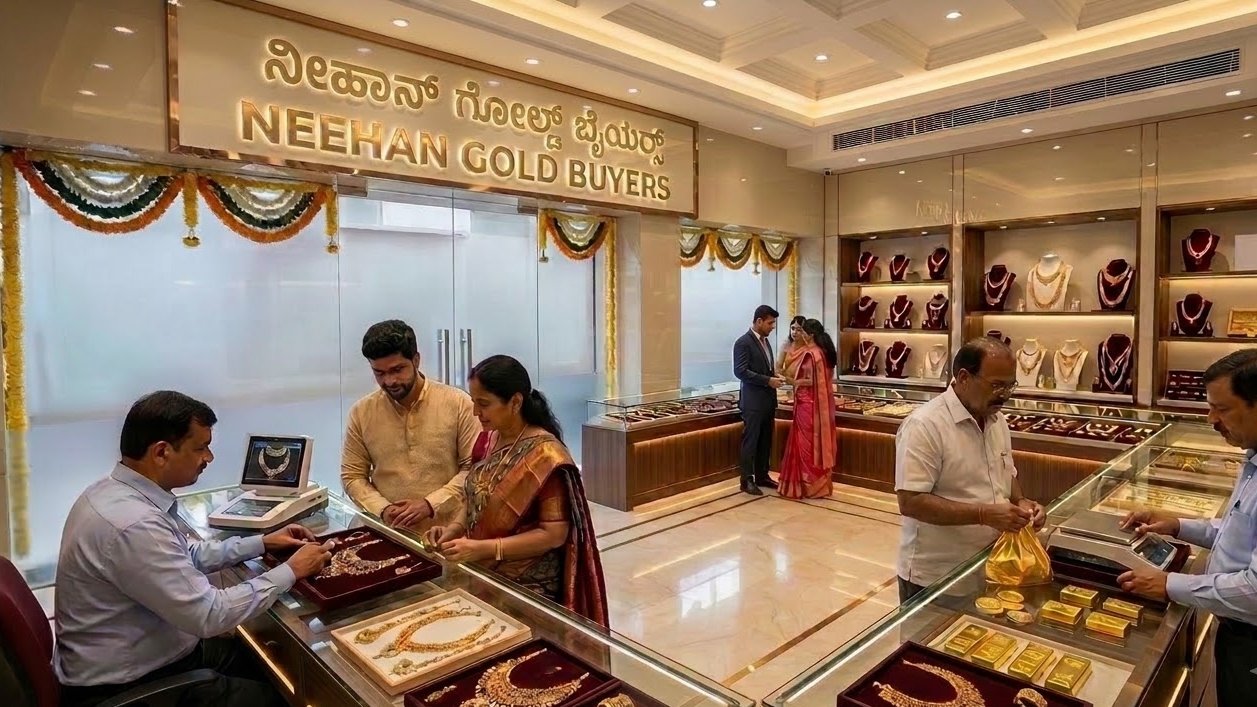
"Should I sell now, or wait?" is one of the most common questions we hear this time of year. There's no way to predict exactly where gold rates will move — nobody can guarantee that with certainty — but there are a few well-known factors that consistently influence gold prices around this period, and understanding them can help you make sense of what you're seeing rather than guessing blind.
What Actually Moves Gold Prices
Gold rates aren't set locally — they're shaped by a combination of global and domestic forces working together.
Why Late August Specifically Gets Attention
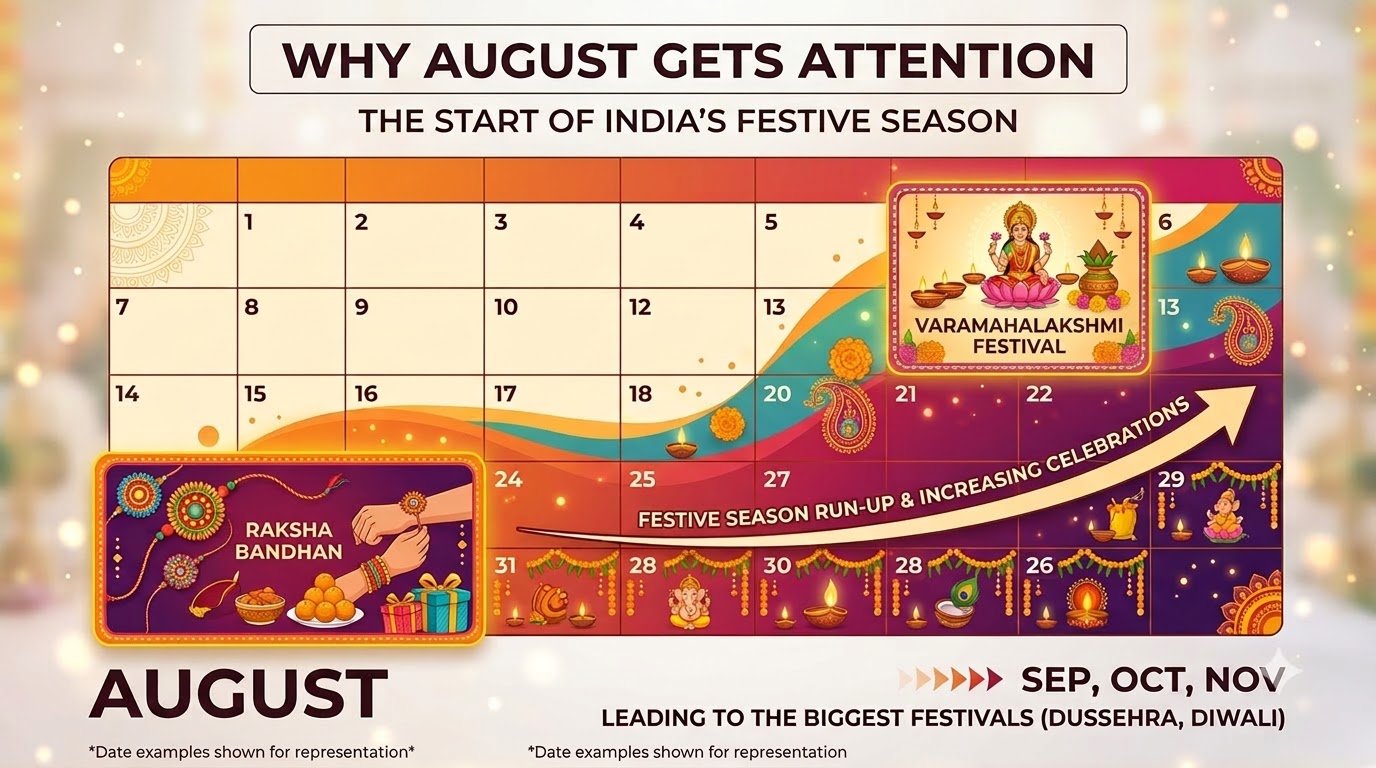
Several culturally significant occasions cluster in this period — Raksha Bandhan and Varamahalakshmi Festival in Karnataka households, followed by the broader festive and wedding season building into September and October. Demand for new gold jewellery typically picks up heading into this stretch, which is also when many families choose to evaluate or liquidate old, broken, or out-of-fashion gold pieces to fund new purchases.
This pattern is about timing your own plans, not about predicting where the rate itself will land. Rising demand for new jewellery doesn't necessarily move the rate in one direction — it's simply a season when more people are actively transacting, for their own personal or festive reasons.
What This Means If You're Considering Selling
We can't tell you whether today's rate is the highest it'll be this month, next month, or next quarter — nobody can, and any business that promises otherwise isn't being straight with you. What we can tell you is:
- The rate changes daily, sometimes more than once in a day
- It's shaped by global and currency factors outside anyone's control
- Festive-season demand for new jewellery is a genuine local pattern, separate from where the rate itself moves
If you're weighing whether to sell old gold, the more useful question isn't "will the rate go up tomorrow" — it's whether you have a genuine use for the funds now (festival gifting, an upcoming purchase, clearing a gold loan) versus holding onto jewellery you don't plan to wear. That's a decision based on your own circumstances, not a market prediction.
How to Check Where Things Stand Today
Rather than relying on a rate you saw somewhere last week, the only reliable number is the current day's rate, checked at the time you're actually considering a transaction. A transparent evaluator will always show you this live figure before quoting you anything, calculated the same way regardless of which day you walk in.
FAQs
Does gold price always go up before festivals?
Not necessarily. Festive season affects demand for new jewellery, but the rate itself is driven by global and currency factors that don't follow a fixed festival pattern.
Is it better to sell gold before or after Raksha Bandhan and Varamahalakshmi Festival?
There's no universal answer — it depends on your own timeline and reason for selling, not a predictable rate movement tied to the festival dates themselves.
Where can I check today's gold rate before deciding?
Ask any evaluator to show you the live rate at the time of your visit — a transparent process is based on that day's number, not an older or estimated one.
Conclusion
Gold rates move on global cues and currency shifts that no one can predict with certainty — what's genuinely predictable is that festive season brings a natural moment for many Bangalore families to evaluate old gold. Whether that's the right time for you depends on your own plans, not a market forecast.